Geometry.Net - the online learning center
Home  - Authors - Mishima Yukio
e99.com Bookstore
  
Images 
Newsgroups
Page 2     21-40 of 68    Back | 1  | 2  | 3  | 4  | Next 20
A  B  C  D  E  F  G  H  I  J  K  L  M  N  O  P  Q  R  S  T  U  V  W  X  Y  Z  

         Mishima Yukio:     more books (100)
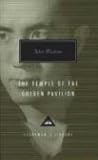
  1. The Temple of the Golden Pavilion (Everyman's Library (Cloth)) by Yukio Mishima, 1995-03-21
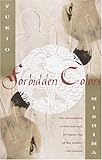
  2. Forbidden Colors by Yukio Mishima, 1999-02-22
  3. THE TEMPLE OF DAWN. by Yukio. MISHIMA, 1973
  4. Patriotism (Second Edition)(New Directions Pearls) by Yukio Mishima, 2010-02-24
  5. Mishima: A Biography by John Nathan, 1975-01-30
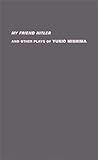
  6. My Friend Hitler by Yukio Mishima, 2002-11-15
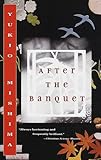
  7. After the Banquet by Yukio Mishima, 1999-02-22
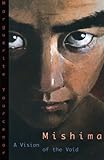
  8. Mishima: A Vision of the Void by Marguerite Yourcenar, 2001-09-01
  9. The Madness and Perversion of Yukio Mishima by Jerry Piven, 2004-04-30
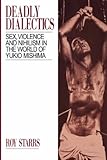
  10. Deadly Dialectics: Sex, Violence, and Nihilism in the World of Yukio Mishima by Roy Starrs, 1994-06-01
  11. The Way of the Samurai Yukio Mishima on Hagakure in Modern Life by Yukio Mishima, 1977-01-01
  12. Der Magnolienkaiser: Nachdenken uber Yukio Mishima (German Edition) by Hans Eppendorfer, 1984
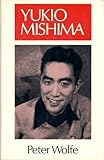
  13. Yukio Mishima (Literature and Life) by Peter Wolfe, 1989-10
  14. Caballos Desbocados by Yukio Mishima, 1986-01-01

21. Mishima, Yukio - Astro-Databank, Yukio Mishima Horoscope, Born 14 January 1925 I
Astrology data, biography and horoscope chart of Yukio Mishima born on 14 January 1925 Tokyo, Japan
http://www.astro.com/astro-databank/Mishima,_Yukio
Mishima, Yukio
From Astro-Databank
Jump to: navigation search Yukio Mishima natal chart (Placidus) natal chart English style (Equal houses) Yukio Mishima Name Mishima, Yukio Gender : M Birthname Kimitake, Hiraoka born on 14 January 1925 at 21:00 (= 9:00 PM ) Place Tokyo, Japan, Timezone JST h9e (is standard time) Data source Bio/autobiography Rodden Rating B Astrology data Asc. add Yukio Mishima to 'my astro'
Biography
Japanese writer whose prolific output includes novels, short stories, plays and essays. One of his most memorable works was "The Sailor Who Fell From Grace With The Sea," 1963. Mishima Yukio was the most important writer of post war Japan. He crystallized Japan's tensions between longing for traditional ways of life and the persistent demands of encroaching westernization. Life magazine called him "the Japanese Hemingway." The first child of a high level civil servant, Mishima was taken from his mother by his grandmother and raised by her on the first floor of the family home, only allowed to be with his mother when she fed him. The grandmother kept her grandson by her side at all times. He was educated at the prestigious Peers School in Tokyo. He began to write as a youth, and published his first short story at 16 under the pseudonym Mishima Yukio to conceal his age. From adolescence on he was possessed by violent, macabre and sado-masochistic fantasies, playing out imagery of murder for entertainment, cannibalism and homosexuality, masturbating for the first time over a picture of a bleeding martyred saint. When World War II began, he tried to join the army but failed to qualify, and instead spent the war working in a factory in Tokyo

22. Mishima Yukio - Encyclopedia Britannica - On History
Full Name Mishima Yukio. Nationality Japanese Activity Japanese author. Born 1401-1925 Died 25-11-1970
http://www.history.co.uk/encyclopedia/mishima-yukio.html

23. Yukio Mishima - Sacred Visons Of Splendor
Essay on the meaning of Mishima s suicide.
http://eric.stamey.com/yukio.html
Yukio Mishima
Sacred Visons of Splendor
Yukio Mishima always had a rather unusual life. As a boy growing up in Japan, Mishima was different than others his age. He seemed to be not like a child, rather, he carried an expression of self-determination and stoicism. Once, as a child, the romantic Mishima flipped through a book of paintings, stopping to study one: "St. Sebastian", which depicted the saint with arrows hanging from his torso and his hands tied to a limb. Mishima was so excited over this picture that he had his first encounter with masturbation as he viewed it (Mishima would later pose for a St. Sebastain-like picture). Mishima studied Karate and became a devout beleiver in the power of Japan and its emperor, so he joined an extreme group called the Tatenokai. Within this group Mishima started his own group of rebels. On November 25, 1970 Mishima's band of rebels (four students), dressed in full uniform, visited the office of General Mashita. The General happily greeted Mishima and his men, but Mishima's demeanor suddenly changed to seriousness as he and the students began to gag and tie up the General and baricade the office. Guards could see through a peephole in the door what Mishima was doing and broke down the door, but Mishima, armed with his sword, attacked the soldiers, almost severing a sergeant's hand off. Mishima's men took the General hostage and threatened to kill him if there were anymore intrusions, meanwhile Mishima demanded that the Jietai Soldiers be assembled in the front of the building.

24. MISHIMA, YUKIO: All His Books And Works In His Libreria House Of The Book
It buys all the books of MISHIMA, YUKIO home of the Book, your space of sale of books.Buy books in your online bookshop of confidence.
http://www.casadellibro.com/libros/mishima-yukio/mishima32yukio/en_gb

25. Yukio Mishima - Wikipedia, La Enciclopedia Libre
Informaci n biogr fica.
http://es.wikipedia.org/wiki/Yukio_Mishima
Yukio Mishima
De Wikipedia, la enciclopedia libre Saltar a navegación búsqueda Yukio Mishima
Fotografía de Shirou Aoyama Nombre completo Hiraoka Kimitake Nacimiento 14 de enero de
Japón
Tokio Shinjuku Defunción 25 de noviembre de
Tokio
, cuarteles de FAJ Seudónimo Mishima Yukio Ocupación novelista dramaturgo Nacionalidad Japonesa Período Lengua de producción literaria Japonés Lengua materna Japonés Género ... teatro , cuento corto, poesía ensayo Descendencia Noriko Tomita, Iichiro Hiraoka Influido por
Dostoyevsky
Yukio Mishima Mishima Yukio , cuyo verdadero nombre era Kimitake Hiraoka Kimitake Hiraoka Tokio Japón 14 de enero de 25 de noviembre de ), fue un escritor y dramaturgo japonés
Contenido
editar Biografía
Yukio Mishima en Hijo de Azusa Hiraoka , secretario de Pesca del Ministerio de Agricultura. Pasó los primeros años de su infancia bajo la sombra de su abuela, Natsu, que se lo llevó y lo separó de su familia inmediata durante varios años. Natsu provenía de una familia vinculada a los samurái de la era Tokugawa , ella mantuvo aspiraciones aristocráticas -el nombre de juventud de Mishima, "kimitake", significa "príncipe guerrero"- aún después de casarse con el abuelo de Mishima, un burócrata que había hecho su fortuna en las fronteras coloniales. Tenía mal carácter y se exacerbó por su ciática. El joven Mishima acudía a masajearla para aliviar su dolor. Ella tenía tendencia a la violencia, incluso con salidas mórbidas cercanas a la locura que serán posteriormente retratadas en algunos escritos de Mishima. Algunos biógrafos opinan que Natsu favoreció la fascinación de Mishima por la muerte. Ella leía francés y alemán, y tenía un exquisito gusto por el

26. Mishima Yukio (Japanese Author) -- Britannica Online Encyclopedia
Mishima Yukio (Japanese author), Jan. 14, 1925Tokyo Nov. 25, 1970Tokyoprolific writer who is regarded by many critics as the most important Japanese novelist of the 20th century.
http://www.britannica.com/EBchecked/topic/385248/Yukio-Mishima
document.write(''); Search Site: With all of these words With the exact phrase With any of these words Without these words Home CREATE MY Mishima Yuki... NEW ARTICLE ... SAVE
Mishima Yukio
Table of Contents: Mishima Yukio Article Article Related Articles Related Articles External Web sites External Web sites Citations ARTICLE from the Mishima Yukio pseudonym of Hiraoka Kimitake Mishima was the son of a high civil servant and attended the aristocratic Peers School in Tokyo. During World War II , having failed to qualify physically for military service , he worked in a Tokyo factory and after the war studied law at the University of Tokyo Kamen no kokuhaku Confessions of a Mask ), is a partly autobiographical work that describes with exceptional stylistic brilliance a homosexual who must mask his abnormal sexual preferences from the society around him. The novel gained Mishima immediate acclaim, and he began to devote his full energies to writing.

27. »³Ãæ¸Ð¼ - ¤ª¤¹¤¹¤á¥¹¥Ý¥Ã¥È
Mishima, Yukio McLelland, M. J. (2006) Mishima, Yukio in G. Brulotte and J. Phillips (eds.) Encyclopedia of Erotic Literature. New York Routledge
http://www.vill.yamanakako.yamanashi.jp/osusume.php

28. Yukio Mishima (IV) > Elmundolibro - Anticuario
Vida del escritor japon s y homosexualidad.
http://elmundo.es/elmundolibro/2001/06/10/anticuario/992010395.html
Domingo, 10 de Junio de 2001 Actualizado a las 14:00 BUSCAR EN ELMUNDOLIBRO ELMUNDO.ES ISBN SECCIONES Portada Protagonistas
de Pombo
Narrativa en Español ...
en la red
TIENDA Inicio Recomendados Libros de la semana Novedades ... Más vendidos Índice temas Artes Ciencia C. Humanas C. Salud Derecho Diccionarios Economía Gastronomía Geografía Informática Lingüística Literatura Lit. infantil Narrativa Ocio MALDITOS, HETERODOXOS Y ALUCINADOS
Yukio Mishima (IV)
JAVIER MEMBA
Prácticamente reducido al ecuador de los años 80, cuando el estrenó de la película de Paul Schrader -«Mishima» (1984)- y la reedición de la traducción de Juan Marsé de «El pabellón de oro» (Seix Barral, 1963, 1985) llamaron la atención de los medios de comunicación sobre él, el interés del lector español medio por la obra de Yukio Mishima puede calificarse de tibio. Según parece, el novelista y dramaturgo nipón viajó por nuestro país meses antes de quitarse la vida. Es más, incluso se cuenta que llegó a tratar en repetidas ocasiones al doctor Vallejo Nájera, quien aparentemente se nos antoja tan alejado a su torturado colega oriental. Pero, en honor a la verdad, hay que apuntar la obra del escritor, que durante años fue el novelista japonés más conocido en Occidente, en líneas generales, en España ha inspirado la misma indiferencia que el resto de las manifestaciones culturales niponas.
La primera, de las no pocas contradicciones que presenta su biografía, es que, siendo la principal preocupación de su vida y de su obra la preservación de los valores del Japón tradicional, anterior a la occidentalización, Mishima sintiera a la vez la mismo interés por Occidente que Occidente por él. De hecho, los estudiosos de la literatura japonesa, enmarcan su obra dentro de la influida por la impronta occidental.

29. Yukio Mishima: Biography From Answers.com
Escape from the Wasteland Romanticism and Realism in the Fiction of Mishima Yukio and Oe Kenzaburo (HarvardYenching Institute Monograph Series, No 33) by Susan J. Napier (Harvard
http://www.answers.com/topic/yukio-mishima
var isReferenceAnswers = true; BodyLoad('s'); On this page Library
Yukio Mishima
Who2 Biography:
Yukio Mishima Writer
Home Library Miscellaneous Who2 Biographies ... Source
  • Born: 14 January 1925 Birthplace: Tokyo, Japan Died: 25 November 1970 (suicide) Best Known As: Seppuku-committing Japanese author
Name at birth: Kimitake Hiraoka Yukio Mishima is one of the most widely-read Japanese authors of the 20th century, due in part to his dramatic suicide in 1970. Born in Tokyo, Mishima studied law and was a civil servant before turning to writing exclusively. Over his career he was incredibly prolific, a writer of novels, short stories, plays and political and literary criticism, beginning in the late 1940s. Nominated for the Nobel Prize three times, his most famous books include Gogo no eiko (1965, translated as The Sailor Who Fell From Grace With the Sea Kinkakuji The Temple of the Golden Pavilion ) and the tetralogy Hojo no umi The Sea of Fertility ). His personal life got just as much attention as his writing: after a 1952 trip to Greece Mishima began a strict regimen of body-building, and he became keen on photographing his chiseled physique in poses reminiscent of the death of the Christian martyr St. Sebastian. He also became obsessed with loyalty to the emperor and formed his own small army, called the Shield Society. On November 25, 1970, he delivered the complete manuscript of the last work in his tetralogy, then proceeded with four followers to the headquarters of the Japanese Self-Defense Force, where he read a "manifesto" and then committed

30. Cuentos De Yukio Mishima - Biblioteca Digital Ciudad Seva
Selecci n de cuentos digitalizados del escritor.
http://www.ciudadseva.com/textos/cuentos/jap/mishima/ym.htm

Libros
El Autor Obra Literaria Otros Escritos ... Novedades Yukio Mishima
Japón: 1925-1970 Cuentos
Textos electrónicos completos El muchacho que escribía poesía
El sacerdote y su amor

La perla
Los siete puentes ... obre el arte de narrar 25 Apr 2005 El silencio de Galileo
Luis López Nieves
  • Hace ver en el corazón de la ambición humana. Otro Lunes, España Narración ágil que atrapa al lector. Veintitrés, Argentina Atrapa al lector desde el primer “correo”. Cathedralis, México Un escritor arriesgado y en su riesgo gana la literatura. La Opinión, Colombia Una creación en sí genial. Universidad de Georgetown, Estados Unidos Pone patas arriba las concepciones actuales. Punto de Libro, España Una historia fascinante. El Comercio, Ecuador Una ficción sobresaltante. El Nacional, República Dominicana Arrincona la verdad. Prensa, Panamá Lenguaje cotidiano, acelerado y vivaz. El Nuevo Herald, Estados Unidos

31. Mishima Yukio - Research And Read Books, Journals, Articles At
Mishima Yukio Scholarly books, journals and articles Mishima Yukio at Questia, world's largest online library and research service. Subscribe now and do better research, faster
http://www.questia.com/library/literature/literature-of-specific-countries/japan

32. : : : : : Yukio Mishima : : : : :
Semblanza y fragmento de los siete puentes.
http://www.epdlp.com/escritor.php?id=2049

33. Mishima Yukio
Essay on the availability in English of the fiction of Yukio Mishima
http://www.washburn.edu/reference/bridge24/Mishima.html
I say that the strongest literary influence on my whole life has been Shakespeare, of course, but in my early years in graduate school it was Nathaniel Hawthorne, and in the years between 1973 and 1983 it was definitely Yukio Mishima, for he captured my attention in a single evening (in the film version of one of his short stories, Rites of Love and Death ), and then drew me into the study of Japanese literature, which was my primary activity for that ten years, and, during that period, more and more of his work came to be translated into English. So I am offering as my item on Japanese Literature for April, 2000, the first thing I wrote in the field, The Availability of Yukio Mishima (published in Inscape in 1974), which I think has held up pretty well. In my judgment Mishima will stand taller than any twentieth-century American novelist 200 years from now, and I was pleased to see that The East , a magazine I subscribe to, selected him as the most important figure in Japanese literature for the century. I would still be pleased to teach a course in Mishima (as I used to tell my department chairman about the British Literature survey course, "free in the middle of the night")though I would also be willing to teach a course on James Joyce, with whom I have worked much more in the last few years, whom Time Magazine chose as the most important novelist of the century, and who does have a chance of standing taller than Mishima 200 years from now.

34. Yukio Mishima
Etapas en la vida del autor y libros digitalizados para descargar.
http://www.elbeso.cl/ElFestinMishima.htm

35. Mishima Yukio: Free Encyclopedia Articles At Questia.com Online Library
Research Mishima Yukio and other related topics by using the free encyclopedia at the Questia.com online library.
http://www.questia.com/library/encyclopedia/101259053

36. Yukio Mishima: La Perla
Relato del escritor japon s.
http://www.lainsignia.org/2001/mayo/cul_046.htm
Portada Directorio Debates Buscador ... Correo 11 de mayo del 2001
La perla
Yukio Mishima
El 10 de diciembre era el cumpleaños de la señora Sasaki. La señora Sasaki deseaba celebrar el acontecimiento con el menor ajetreo posible y solamente había invitado para el té a sus más íntimas amigas, las señoras Yamamoto, Matsumura, Azuma y Kasuga, quienes contaban exactamente la misma edad que la dueña de casa. Es decir, cuarenta y tres años. Estas señoras integraban la sociedad "Guardemos nuestras edades en secreto" y podía confiarse plenamente en que no divulgarían el número de velas que alumbraban la torta. La señora Sasaki demostraba su habitual prudencia al convidar a su fiesta de cumpleaños solamente a invitadas de esta clase. Para aquella ocasión la señora Sasaki se puso un anillo con una perla. Los brillantes no hubieran sido de buen gusto para una reunión de mujeres solas. Además, la perla combinaba mejor con el color de su vestido. Mientras la señora Sasaki daba una última ojeada de inspección a la torta, la perla del anillo, que ya estaba algo floja, terminó por zafarse de su engarce. Era aquel un acontecimiento poco propicio para tan grata ocasión, pero hubiera sido inadecuado poner a todos al tanto del percance. La señora Sasaki depositó, pues, la perla en el borde de la fuente en que se servía la torta y decidió que luego haría algo al respecto. Los platos, tenedores y servilletas rodeaban la torta. La señora Sasaki pensó que prefería que no la vieran llevando un anillo sin piedra mientras cortaba la torta y, muy hábilmente, sin siquiera darse vuelta, lo deslizó en un nicho ubicado a sus espaldas.

37. Debats 80 Primavera 2003
La obsesi n samurai de Mishima.
http://www.alfonselmagnanim.com/debats/80/quadern05.htm
Debats 80 Primavera 2003 - QUADERN
Yukio Mishima y Japón. Arquetipos de la posmodernidad
Yukio Mishima fue un escritor obsesionado desde la niñez por el espíritu del samurai y, más tarde, por la muerte. En su arte y acción cultivó una estética moderna, pero su modernidad no hacía otra cosa que sugerir el mito antiguo. Paradójico, ¿no es verdad? Algo parecido le ha venido sucediendo a Japón. Por supuesto, sin reivindicar al samurai y la muerte, vemos que su semblante de país ultra avanzado opera como una máscara que sabe encubrir a la perfección su fidelidad a las ancestrales tradiciones. Ambos, Mishima y Japón, no son sino “estrategas de lo invisible�. El primero vivió y murió en esa “estrategia�, el segundo existe gracias a ella. ¿No es esto posmodernidad? Michel Random es un escritor francés que cultiva las artes marciales. Ha visitado varias veces Japón. En una de ellas decidió conocer a Yukio Mishima, ya por entonces célebre escritor. Lo entrevistó y luego fue invitado a su casa de Tokio, en 1968, poco antes de morir . Más tarde, Random relató su encuentro en un libro cuyas claves eran ya anticipadas por las respuestas de Mishima

38. Mishima, Yukio - Definition Of Mishima, Yukio By The Free Online Dictionary, The
Mi shi ma (msh m, m sh-m ), Yukio Originally Kimitake Hiraoka. 1925-1970. Japanese author best known for The Sea of Fertility (1970), a tetralogy which explores the
http://www.thefreedictionary.com/Mishima, Yukio

39. Mishima, Yukio Definition Of Mishima, Yukio In The Free Online Encyclopedia.
Mishima, Yukio (y `kē� mĭsh`ēm ), 1925–70, Japanese author, b. Tokyo. His original name was Kimitake Hiraoka and he was born into a samurai family.
http://encyclopedia2.thefreedictionary.com/Mishima, Yukio

40. Yukio Mishima, écrivain Et Guerrier
Biographie et bibliographie de l crivain japonais.
http://fabien.osmont.free.fr/mishima/mishfram.htm
Bienvenue sur le site Web
consacré à Yukio Mishima Si vous lisez cette page, c'est que votre navigateur ne sait pas lire les cadres (frames). Pour parcourir malgré tout ce site, voici un lien vers le sommaire Bonne lecture !!!

A  B  C  D  E  F  G  H  I  J  K  L  M  N  O  P  Q  R  S  T  U  V  W  X  Y  Z  

Page 2     21-40 of 68    Back | 1  | 2  | 3  | 4  | Next 20

free hit counter